Get Grooven At A Glance
- Streaming-only TV relies on consumer apps, while DIRECTV FOR BUSINESS is licensed for shared viewing.
- Consumer streaming accounts are licensed for household use, so one account can’t serve a whole property.
- Streaming setups depend on strong internet and a well-designed property network.
- True cost includes equipment, installation, network upgrades, licensing, and support.
- Most properties do best with licensed live TV plus built-in streaming apps.
The Short Answer on DIRECTV vs. Streaming-Only TV
Consumer streaming subscriptions are generally designed for personal, noncommercial viewing, while hotels, senior living communities, and multifamily properties may need commercial TV service or additional content rights. The requirements depend on the service, content, and viewing environment, so properties should verify that their TV service and content subscriptions permit the intended use. Because streaming-only setups also lean heavily on internet capacity, most properties do best with licensed live TV that has streaming apps or casting built in.
Why Properties Are Weighing DIRECTV Against Streaming-Only TV
Streaming made up 49% of all US television viewing in July 2026, according to Nielsen’s The Gauge. That shift shows up at the front desk and the leasing office, too. Guests and residents arrive with their favorite apps already on their phones, so many owners wonder whether a streaming-only setup could replace a traditional TV provider altogether.
It’s a fair question, but the answer depends on more than a channel lineup. Licensing rules, network capacity, existing wiring, and long-term costs all play a part, yet they rarely appear on a monthly price sheet.
In this post, we compare DIRECTV with streaming-only TV for properties. We’ll cover what streaming-only really means, why consumer licensing matters, and what each option asks of your network. After that, we’ll walk through total cost and the setups that tend to fit hotels, senior living communities, and multifamily properties.
Commercial DIRECTV Service vs. Consumer Streaming Apps
Commercial DIRECTV service gives guests and residents live channels on every TV without the need for a personal login. Properties generally need commercial service whenever TV plays for guests or residents across many rooms, units, or shared spaces. DIRECTV FOR BUSINESS licenses live programming for shared viewing and can reach a property via satellite, IPTV, or internet streaming. The right DIRECTV delivery method usually comes down to dish placement, internet capacity, and the wiring already inside your walls.
Many owners picture DIRECTV as a satellite-only service, so its streaming options may come as a surprise. Commercial DIRECTV systems for hotels can include built-in streaming apps alongside live channels. For apartments and condos, DIRECTV for Multifamily also offers a bulk streaming option that delivers property-wide service over the internet with no satellite dish.
When people talk about streaming TV at a property, they could mean any of three very different setups.
- Consumer Streaming Apps – Netflix, Hulu, or similar household subscriptions
- Commercial Streaming TV – Licensed channels delivered over the property’s internet
- Managed IPTV – Provider-managed TV over the property’s own network
Each setup comes with its own licensing, equipment, and support needs. A streaming-only property relies on the first group, consumer apps, with no commercial TV service behind them. Because DIRECTV can also run over the internet, the real choice sits between licensed commercial TV and consumer apps on their own.
Commercial Licensing for Guest Rooms and Shared Spaces
Commercial licensing keeps a property legal when guests or residents watch TV in rooms, lobbies, and common areas. It is generally required any time programming is played outside a single household.
By contrast, consumer streaming accounts come with terms that limit where and how people watch. Netflix’s terms of use, for example, state that the service is for personal, noncommercial use and may not be shared outside the subscriber’s household. The same terms also rule out commercial use and public performances. Other services set their own rules, so it’s worth reading each agreement before building a plan around it.
For that reason, a hotel can’t sign up for one streaming account and load it onto 80 guest room TVs. A senior living community playing a movie in its theater room faces the same issue, as does an apartment clubhouse showing a big game. Commercial TV services license programming for shared and public viewing, which is a big part of why hospitality TV differs from home TV.
At your property, guests and residents can still watch their own subscriptions. DIRECTV’s Advanced Entertainment Platform, for instance, lets hotel guests cast from their own phones, so each person streams through an account they already pay for.
Hardware matters, too. Commercial TV installations may require compatible televisions, receivers, or other equipment, depending on the provider and delivery system. Before selecting a solution, confirm that the property’s existing TVs and wiring are supported.
Property Network Capacity for Streaming TV
A strong property network keeps streams from buffering when guests and residents watch at the same time. This matters most on busy evenings and in streaming-heavy setups.
Every streaming setup runs on two things: your internet circuit and the network inside your buildings. Satellite DIRECTV, by comparison, delivers live TV without an internet connection, although streaming apps and some on-demand features still need one.
Bandwidth adds up quickly once dozens of TVs stream at the same time. Netflix recommends 5 Mbps for each 1080p stream and 15 Mbps for each 4K stream. At those rates, 100 guest rooms streaming in full HD on a busy evening could pull about 500 Mbps before anyone checks an email.
That same connection also carries guest Wi-Fi, staff systems, and security cameras. When TV traffic competes with everything else, a quiet evening can quickly turn into a string of buffering complaints. For this reason, any streaming-heavy plan needs enough guest network bandwidth and a well-designed Wi-Fi or wired network behind it.
Existing wiring plays a role, too. Many properties can run DIRECTV over the coaxial or structured cabling already in place. Others use G.hn over existing wiring to add faster connections without opening walls.
The Realities of Streaming-Only TV at Commercial Properties
Streaming-only TV gives guests and residents familiar apps, but its day-to-day challenges usually surface after installation, often on a property’s busiest nights. Here’s what owners tend to run into.
- Logins on Shared TVs – Without a hospitality platform that clears accounts at checkout, guest logins can stay on the TV for the next person.
- Limited Live Local Channels – On-demand apps such as Netflix don’t typically carry live local news, weather, or sports.
- Outages Hit TV Too – When the internet goes down, every streaming TV goes dark with it.
- Device Upkeep – Streaming sticks and smart TV apps need updates, resets, and replacements in every room.
- More Staff Calls – Password resets, frozen apps, and confusing menus usually land on the front desk or community staff.
These realities explain why most properties pair streaming apps with a licensed, managed live TV service.
Total Cost of Ownership for DIRECTV and Streaming-Only TV
A total cost comparison helps owners avoid a cheap-looking setup that leaves guests and residents with spotty TV. This comparison belongs in every quote review or renovation plan.
To compare the total cost of DIRECTV and streaming-only TV, add up equipment, installation, network upgrades, licensing, support, and recurring fees for each option over the same period. A streaming plan with a lower monthly rate can still cost more once network upgrades and device replacements enter the math.
- Equipment – Commercial-grade TVs, devices, and headend hardware
- Installation – Mounting, wiring, and setup for every TV
- Network Upgrades – Bandwidth, access points, and switches
- Licensing – Commercial rights for shared viewing
- Support – Who responds when a TV fails, and how fast
- Recurring Fees – Programming, circuits, platform fees, and replacements
Bulk programming can shift the math as well. Commercial DIRECTV packages are priced across many TVs at once, and some hotel systems qualify for equipment subsidies that help offset installation costs. Neither path wins on cost every time, so ask each provider for a side-by-side quote that covers all six areas over the same contract term.
TV Setups by Property Type
Matching the TV setup to the property type gives guests and residents the channels and controls they expect, and it comes into play during new builds, renovations, and provider changes. Most properties end up with a mix of licensed live TV and streaming apps, and the balance shifts with who’s watching and how your buildings are wired.
Hotels and Resorts
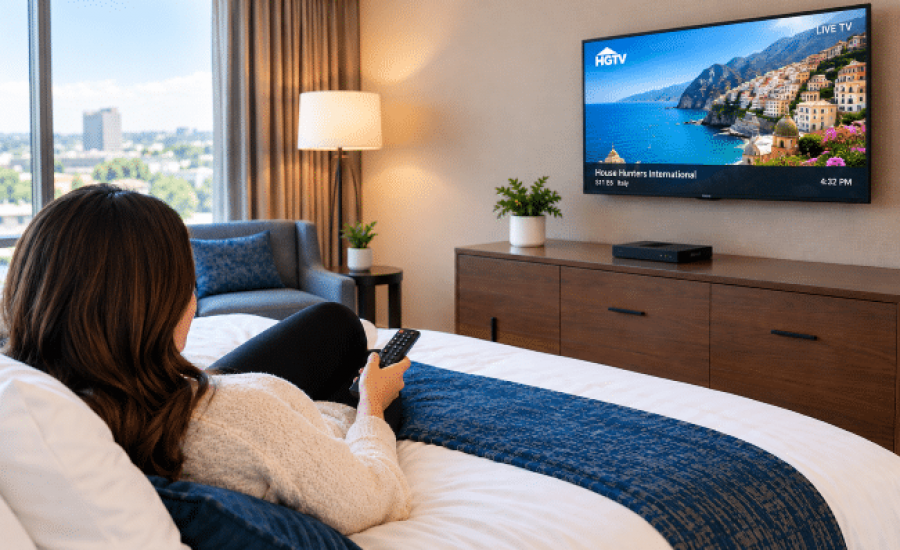
Hotel guests want a familiar lineup, local news and weather, live sports, and quick access to their own apps. They also want one remote and no setup steps. A licensed DIRECTV system with built-in apps and casting covers all of that, so streaming keeps its place in the room alongside live TV. Guests increasingly expect their favorite apps on the room TV, and the three DIRECTV hotel platforms fit different room counts, wiring, and budgets.
Senior Living Communities
Senior living residents often care most about familiar channels, easy-to-read screens, closed captioning, and a simple remote. Streaming apps with passwords and layered menus can frustrate residents and add to staff workload. For that reason, many communities choose managed DIRECTV for senior living or a managed IPTV platform. Our TotalVue IPTV platform, built specifically for senior living, offers adjustable on-screen text size and closed captioning, two features residents notice right away when IPTV comes to senior living.
Multifamily Communities
Apartment residents often bring their own streaming subscriptions, so operators weigh amenity value against infrastructure cost. DIRECTV for Multifamily bulk service gives every unit a licensed lineup, and residents can keep their personal apps on top of it. Clubhouses, fitness centers, and leasing lounges count as shared spaces, so the TVs there need commercial licensing either way. Owners also tend to weigh how they’ll fund property technology before choosing a TV model.
Common Questions About DIRECTV and Streaming-Only TV
A hotel generally can’t use a regular Netflix account across guest room TVs since Netflix licenses its consumer service for personal, noncommercial use within a single household. Its terms specifically rule out commercial use and public performances, so properties rely on commercial TV services or let guests cast from their own accounts. Hotel TV platforms with built-in apps or casting give guests their own content while the property stays within its licenses. A provider can confirm which options work with your current TVs.
Bandwidth needs depend on how many TVs stream at once and at what quality. Netflix’s own guidance of 5 Mbps per 1080p stream and 15 Mbps per 4K stream offers a useful starting point. Therefore, a property with 50 TVs streaming in full HD at the same moment could consume roughly 250 Mbps at Netflix’s recommended speed, before accounting for network overhead and other property traffic. Actual capacity requirements depend on the TV platform and network design. Guest Wi-Fi, staff devices, and building systems share that same connection. Plan for your busiest evenings with room to spare, and consider a network assessment before you commit.
Yes, a property can offer both. Since DIRECTV hotel platforms pair a licensed live TV lineup with built-in streaming apps and casting, apartment residents can keep their personal subscriptions alongside a bulk DIRECTV lineup. In this scenario, guests and residents get local news, live sports, and their own shows on the same screen. The right mix depends on your wiring, your network, and who’s watching.
Streaming-only TV can look cheaper on a monthly basis, but the full cost depends on network upgrades, commercial-grade TVs, streaming devices, licensing, installation, and ongoing support. The most reliable way to know is to compare complete quotes for both options over the same contract term with every one of those costs included. Bulk commercial programming and equipment subsidies can narrow the gap for DIRECTV. On the other hand, a property with a strong existing network may spend less on upgrades for streaming.
Choosing the Right TV Service for Your Property
The DIRECTV vs. streaming-only TV decision comes down to licensing, network capacity, wiring, and total cost. Consumer apps are licensed for households, so properties need commercial service for shared viewing. Streaming also leans heavily on your network, and the lowest monthly rate can hide a higher total cost. For most hotels, senior living communities, and apartment buildings, licensed live TV with streaming built in gives everyone what they want.
That’s everyday work for us at Groove Technology Solutions. We look at your current TVs, wiring, and network, then help you choose the DIRECTV setup for your property that fits your guests or residents and your budget. Our in-house team handles installation and offers around-the-clock support afterward, backed by the Groove Guarantee and thousands of five-star reviews.
If you’re weighing your options, we’d be glad to talk it through. Reach out to us whenever the timing feels right, and we’ll take a look at what makes sense for your property.

