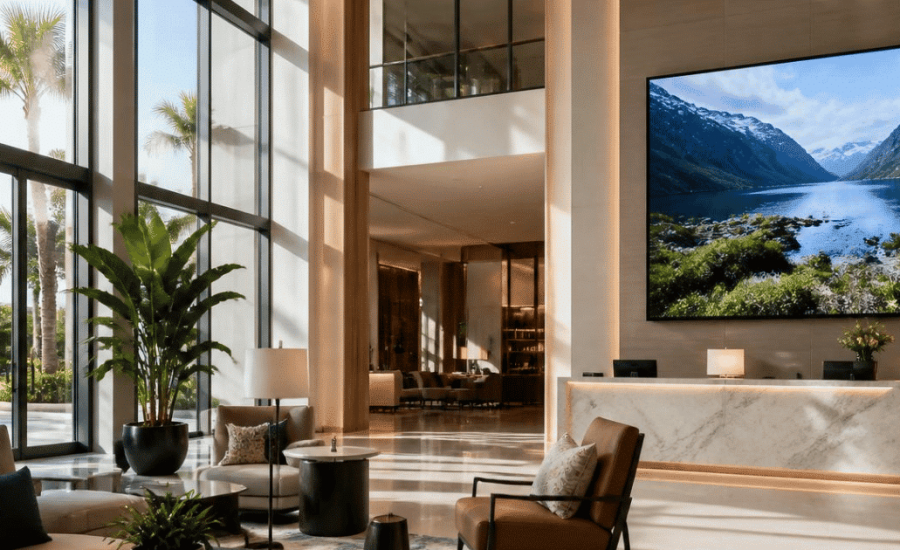
Hotel common area audio video systems are the speakers, displays, microphones, and controls installed in lobbies, meeting rooms, and fitness centers to deliver background music, live TV, digital signage, and presentation capability across shared spaces.
Get Grooven At A Glance
- Hotel common area audio video usually includes lobby music and displays, meeting room presentation gear, and fitness center TVs and sound.
- Among meeting planners, 60 percent call advanced audio video support a top priority, so meeting room technology directly affects group bookings.
- Zoned audio lets staff set different music and volume levels for the lobby, bar, and fitness center from one simple control.
- Hotels generally need proper licensing to play recorded music in common areas, and personal streaming accounts typically do not cover it.
- Planning audio video during a renovation and using one provider for installation and support keeps costs and downtime in check.
Why Audio Video Systems Matter in Hotel Common Areas
In the 2025 State of the Meetings Industry report from Cendyn and ConferenceDirect, 60 percent of meeting planners ranked advanced audio video (AV) support as a top priority. That number reflects something hotel owners and general managers already feel every day. Guests judge a property by its shared spaces as much as by its rooms.
A lobby with patchy sound, a meeting room display that won’t connect, or a gym TV stuck on a blank screen all chip away at that judgment. Each one also sends a guest or planner to the front desk for help. In many hotels, common area technology gets added one piece at a time, which makes those gaps more likely. Well-planned AV ties those spaces together and stays simple for staff to run.
What Audio Video Systems in Hotel Common Areas Include
Audio video systems in hotel common areas include:
- Speakers and amplifiers
- Displays and digital signage screens
- Microphones
- Structured cabling
- Zone controls and management panels
- Live TV and content distribution
A typical setup covers lobby music and TVs, meeting room presentation gear, and fitness center screens and sound, all managed from simple controls. Many properties also run digital signage on the same network, so event schedules and dining promotions appear on lobby screens without printed signs. Live TV from a provider such as DIRECTV fills lobby, bar, and gym screens with news and sports. Underneath it all, structured cabling carries AV signals from room to room.
Together, these systems make up a large share of the hotel property technology guests interact with outside their rooms. For that reason, they deserve the same planning attention as in-room TV and Wi-Fi.
What Should Hotel Lobby AV Include?
The lobby is where guests form their first impression. Sound shapes that moment as much as lighting or furniture. Background music at the right volume makes a large, hard-surfaced space feel warmer and can help helps mask the clatter of rolling luggage and overlapping conversations. On the other hand, music that is too loud or uneven from one corner to the next makes check-in harder for guests and staff.
Speakers
Evenly spaced ceiling speakers keep volume consistent across hard-surfaced spaces, so no corner is too loud or too quiet.
Paging
An audio paging system lets staff make announcements when needed.
Displays
TV displays add a second layer, like a large screen near the seating area that runs live news or local weather, while a smaller screen by the elevators shows meeting room assignments.
On-Brand Details
Many hotels choose music and on-screen content that match their brand, so a boutique property and a family resort sound and look noticeably different.
What AV Equipment Does a Hotel Meeting Room Need?
Because planners rank AV support so highly, this is the room where technology most directly affects your bottom line. Planners booking a sales kickoff or a board meeting expect a display that turns on right away and a laptop that connects on the first try. They also expect audio that reaches the back row. When those basics work, groups are more likely to book again.
A dependable hotel conference room setup usually includes these pieces:
- Displays or Projectors – A screen sized for the room keeps slides readable from every seat. Larger rooms often need a projector and screen or more than one display.
- Wireless and Wired Connections – Guests bring all kinds of laptops and phones. A wireless presentation option plus a standard cable connection should cover nearly everyone’s connection needs.
- Microphones and Speakers – Ceiling or tabletop microphones help remote attendees hear the room clearly. Evenly placed speakers do the same for people in their seats.
- Video Conferencing – A camera and conferencing setup lets presenters bring in colleagues who cannot travel.
- Simple Controls – One wall panel or touchscreen turns everything on and switches inputs. As a result, staff spend less time troubleshooting.
Installed meeting room AV also changes the math on events. Hotels that rent equipment for every booking often have to pay repeated setup fees or share event revenue with an outside AV company. Built-in systems let the property include technology in its meeting packages and stay ready for the next group. Business travelers notice these details as part of the broader technology for business guests they expect on the road.
What AV Equipment Does a Hotel Fitness Center Need?
Hotel fitness centers are small spaces with high expectations. A frozen screen or a dead speaker can sit unnoticed for hours. In the meantime, the next guest is the one who finds it, and that frustration often ends up in an online review. Guests often work out early in the morning or late at night, so they want a TV that turns on quickly and plays a channel they recognize, and live sports and news are the usual favorites.
Placement makes a real difference. Commercial TV displays mounted so that every machine has a clear view keep guests from craning their necks on the treadmill. Background music that fills the room evenly keeps the space from feeling empty, and a simple volume control lets staff adjust it as needed. Because many fitness centers run around the clock with no staff present, reliable equipment matters even more here.
How Does Zoned Audio Work in a Hotel?
Zoned audio divides a hotel into separate areas, each with its own music source and volume level. The lobby, bar, and fitness center can play different music simultaneously, and staff can adjust any zone from one panel, tablet, or app without affecting the others.
Controls matter just as much as the equipment behind them. Front desk teams change shifts often, and the person on the overnight shift may not be the one who set things up that morning. Clearly labeled controls and a short list of presets help any team member make changes in seconds.
AV systems can also connect with other hospitality technology on the property. For example, lobby music and lighting can shift together from a bright morning setting to a softer evening one without anyone touching a control.
How to Plan a Hotel AV Installation
When to Install
The best time to plan common area AV is during a renovation or new build, when ceilings and walls are already open. Running cable and mounting speakers at that stage costs less and causes less disruption than coming back later. Older properties can still upgrade through retrofit work that reuses existing pathways where possible.
How to Manage Vendors and Support
The next question is who owns support. Hotels managing separate vendors for TV, Wi-Fi, signage, and sound often deal with three or four support calls before anyone takes ownership of a problem. That kind of hotel technology vendor sprawl adds cost and slows down repairs. Working with one provider for design, installation, and ongoing support keeps accountability in one place.
Support plans close the loop. Remote monitoring, quick response times, and clear service terms help catch problems early, before a sold-out weekend turns into a line of complaints at the front desk.
Frequently Asked Questions About Hotel Common Area AV
In most cases, yes. Hotels typically need public performance licenses from performing rights organizations such as ASCAP, BMI, SESAC, and GMR, or a commercial background music service that includes licensing. Personal streaming accounts like Spotify are limited to personal, noncommercial use.
For hotels that host meetings regularly, installed AV typically costs less over time than repeated rentals. Built-in systems stay ready for every booking, eliminate setup fees, and let the property bundle technology into its meeting packages. Renting still makes sense for occasional large events that need specialized production gear. Reviewing past event orders and planner requests is a practical way to decide where installed systems pay off.
A hotel AV installation takes anywhere from one to two days for a single room to several weeks for a property-wide project. The time depends on the number of spaces, whether new cabling is needed, and how much work can happen while those areas stay open to guests. Installers typically start with a site survey and design, then schedule work in phases so only one area closes at a time. Projects planned alongside a renovation often move faster because walls and ceilings are already open. A clear schedule up front helps the front desk prepare guests for any short closures.
Getting Audio Video Right Across Your Hotel Common Areas
The bottom line: hotels that plan lobby, meeting room, and fitness center AV together, with one provider handling design, installation, and support, spend less time troubleshooting and more time focused on the guest experience.
Audio video systems shape how guests experience a hotel’s shared spaces, from the music that greets them in the lobby to the screen behind an important sales presentation. Planned together, lobby audio, meeting room AV, and fitness center TVs create a consistent experience that stays easy for staff to manage. Zoned controls, proper music licensing, and a reliable support plan keep everything running long after installation day.
At Groove Technology Solutions, we design, install, and support hotel audio video systems nationwide, alongside TV, Wi-Fi, digital signage, and the infrastructure that ties them together. Our in-house, U.S.-based technicians handle each project from start to finish, and the Groove Guarantee and thousands of five-star reviews stand behind that work.
If your lobby, meeting rooms, or fitness center could use a refresh, we would be glad to talk it through. Reach out to us whenever the timing works for you, and we will help you figure out what makes sense for your property.

