Get Grooven At A Glance
- In many cases, property owners can install cameras in apartment common areas like lobbies, hallways, parking garages, and package rooms.
- The best camera locations at an apartment complex are entrances and exits, parking areas, lobbies, package rooms, hallways, stairwells, trash areas, and service areas.
- Cameras can help deter and document package theft, vehicle break-ins, vandalism, illegal dumping, and unauthorized entry while reducing blind spots.
- Privacy best practices include keeping cameras out of units and restrooms, leaving audio off without legal approval, and writing a clear footage access policy.
- Video surveillance delivers the most value when it connects with access control, video entry, and package management on a reliable property network.
Why Video Surveillance Matters in Apartment Common Areas
Renters have plenty of choices right now, with the U.S. Census Bureau reporting a national rental vacancy rate of 7.3 percent in the second quarter of 2026. When residents can shop around, they quickly notice which communities feel safe and well run.
Common areas shape that impression more than almost any other part of a property considering lobbies, parking garages, package rooms, and hallways belong to everyone. A single stolen package or garage break-in can travel through a resident group chat in minutes and influence how people feel about the whole community.
Video surveillance is one of the most practical ways to protect those shared spaces. For instance, Parks Associates and DOOR research found a 21 percent decrease in safety and security incidents among properties deploying connected building solutions. While cameras were one part of that connected picture, their thoughtful placement and clear policies decide how much value they actually return.
This guide covers why cameras matter at apartment complexes, where they belong, what privacy rules apply, and which integrations add the most value, plus other tips essential for owner-operators on how to manage a secure multifamily property.
Why Apartment Complexes Invest in Security Cameras
Security cameras for apartment complexes protect the shared spaces that residents, guests, vendors, and staff all pass through every day. The core purpose of video surveillance at a commercial property is to deter problems, document what happened, and help staff respond. For multifamily owners, additional industry-specific issues arise, requiring extra focus on the need for cameras, which include:
- Package Theft – Package rooms and lobbies see heavy traffic, in and out daily. Camera footage can help staff determine who accessed the package room and investigate disputed pickups.
- Vehicle Break-Ins – Garages and parking lots are often the least crowded parts of a property, which makes them easy targets. Video surveillance helps deter break-ins as well as monitor these spaces.
- Vandalism – Graffiti, broken gates, and damaged amenities cost money to repair. Recorded video helps determine responsibility.
- Unauthorized Entry – Cameras at doors and gates reveal tailgating and propped doors that an access log alone can miss.
- Illegal Dumping – Trash enclosures attract old furniture and debris from nonresidents, and those haul-away fees add up fast. With video monitoring, the culprit can be identified.
- Common Area Damage – Fitness centers, clubhouses, and pool decks are expensive to maintain, so recorded video can provide documentation for incident investigations, insurance claims, and, where appropriate, resident or vendor chargebacks.
Cameras also give time back to busy site teams, since a manager can pull up a clip from a phone in a few minutes and move on with the day. That matters even more when one team covers several buildings or a regional manager oversees a whole portfolio.
Safety is also part of the amenity package renters compare on a new prospect tour. A well-lit entrance with visible camera coverage tells prospects that the community takes care of its people. That first impression goes a long way in a competitive leasing market.
Where To Place Cameras in Apartment Common Areas
The best places for video surveillance in apartment common areas are the shared spaces where your property carries liability and residents expect to feel safe. Focus each camera on a specific spot where people, vehicles, or deliveries pass through, starting with the locations below.
- Entrances and Exits – Aim a camera at each door to capture faces as people walk in, plus a wider shot of the approach.
- Parking Garages and Lots – Cover entry and exit lanes to catch license plates, then add views of drive aisles and darker corners.
- Lobbies and Leasing Areas – A wide lobby view shows traffic patterns and helps staff spot tailgating at the front door.
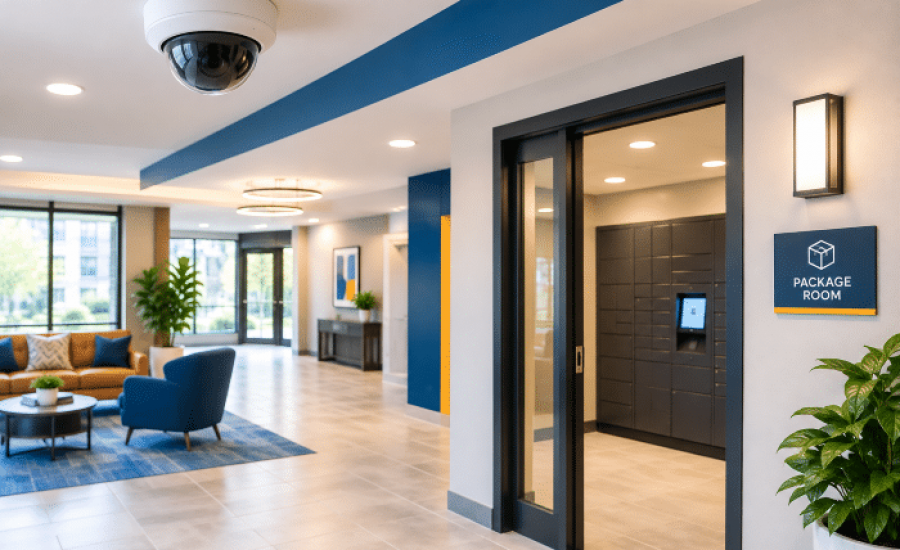
- Package and Mail Rooms – Point cameras at the shelves or lockers and at the doorway so staff can match pickups to residents.
- Hallways and Corridors – Corridor intersections and elevator landings let one camera watch several paths at once.
- Stairwells – These quieter spaces can attract loitering, so a camera at each landing or exit door closes a common gap.
- Trash and Recycling Areas – A camera on the enclosure documents illegal dumping and helps recover haul-away costs.
- Service and Loading Areas – Vendor doors and loading zones see deliveries all day and often get overlooked in older systems.
- Amenity Spaces – Pools, fitness centers, and clubhouses benefit from coverage at entry points and main activity areas.
Student housing communities often add coverage at bike storage and at side doors that residents tend to prop open. It also helps to map how people walk through the property, since a resident might appear on the lobby camera and then disappear through an unwatched side door or stairwell.
Can You Put a Camera in a Communal Area?
Yes. In most cases, property owners can place video cameras in apartment common areas. Lobbies, hallways, parking areas, laundry rooms, and package rooms generally fall into this category.
The rules tighten quickly around private spaces, so cameras should not be installed in areas where people have a reasonable expectation of privacy, such as individual units, restrooms, and changing areas. Many states also have hidden camera and voyeurism laws that apply directly to spaces like these.
Privacy Rules Every Multifamily Property Should Follow
Privacy laws vary by state and city, so local legal counsel should review any camera plan, but a few best practices apply to nearly every apartment community.
Keep Cameras Out of Private Spaces
This includes individual units, restrooms, and changing areas, along with any angle that looks through a unit window.
Leave Audio Off
Federal law generally permits recording when at least one party to a covered communication consents, but some states require all parties to consent. Because surveillance cameras may capture conversations involving people who have not consented, operators should disable audio unless legal counsel has confirmed that recording is permitted.
Post Clear Notice
Signage at entrances and a camera clause in the lease let residents and visitors know where recording happens.
Limit Who Can View Footage
Grant limited access to camera footage based on job role, and remove former employees and vendors from the system right away.
Determine a Retention Policy
Decide how long footage stays on file, how incident clips get saved, and who approves sharing video with police or insurers.
Apply Policies Consistently
Apply camera policies consistently and document exceptions to help avoid disputes and claims of unequal treatment.
Designing a Multifamily Video Surveillance System
A professional video surveillance company follows a structured design process before a single camera goes on the wall. These are the steps experienced integrators, including our team at Groove, use when planning systems for apartment, MDU, and student housing properties. Knowing the process also helps owners compare bids and ask better questions.
1 – Start With a Discovery Conversation
A good integrator begins by asking about incident history, insurance requirements, staffing, and what the owner wants cameras to accomplish. Reviewing site plans and existing equipment at this stage helps the owner avoid paying twice for coverage they already have.
2 – Define What Each Camera Needs to See
Professionals give every camera a purpose, whether that is a general view of a lobby or a detailed identification shot of faces and license plates at an entry point. From there, they match each spot with the right camera type and lens, weighing resolution, field of view, and night vision capabilities.
3 – Map Coverage on the Site Plan
The design team plots each camera’s field of view on the site plan to confirm overlapping coverage at entrances and to catch blind spots before anything gets installed. They also check every angle against privacy rules, keeping cameras pointed away from unit windows, restrooms, and other private spaces.
4 – Engineer the Network and Power Source
Power over Ethernet (PoE) cameras run on a single cable for power and data, and a standard copper Ethernet run is typically limited to 100 meters (328 feet), which affects switch and network-closet placement. Professionals also plan structured cabling, battery backup for recorders and switches, and a separate network segment that keeps cameras apart from resident traffic.
5 – Size Storage to the Retention Policy
Camera count, resolution, frame rate, and the property’s retention period determine how much storage the system needs. A professional runs those numbers up front and then recommends cloud, on-site, or hybrid storage based on budget and how often staff need remote access.
6 – Set Up Software, Alerts, and User Access
During configuration, technicians set role-based permissions, motion zones, and mobile alerts so the right people get notified without constant false alarms. AI analytics that tell people from vehicles help here too, which is one of the bigger ways AI is changing video surveillance for property teams. They also replace default passwords and update firmware before the system goes live.
7 – Test, Document, and Train
Before signing off, the installer checks every view in daylight and after dark, fine-tunes focus and angles, and records each camera’s location on as-built drawings. Site staff then get hands-on training so they can pull footage and share clips without calling for help.
8 – Plan for Support and Growth
A professional design leaves room for added cameras as the property changes, and it includes a maintenance plan for cleaning lenses, monitoring camera health, and replacing aging hardware. Some owners prefer a monthly service model to spread those costs, which ties into the capital versus operating expense question.
Video Surveillance Integrations for Apartments and Student Housing
Video surveillance does its best work as part of a connected property, and Parks Associates research shows security monitoring is a common piece of multifamily smart building systems. The integrations below tend to deliver the most day-to-day value for site teams.
- Access Control – Linking door events to video lets staff click an access control entry and see who actually walked in. Cloud platforms make that link easier, which is one reason many owners are weighing cloud-based versus traditional access control.
- Video Entry – A video entry panel lets residents and staff see visitors before granting access and can provide another video source when recording is supported.
- Package Management – Cameras on parcel lockers and package rooms confirm pickups and help settle missing package claims quickly.
- Managed Wi-Fi and the Property Network – Cameras rely on the property’s network infrastructure, so planning surveillance traffic alongside managed Wi-Fi for multifamily and other connected systems helps maintain reliable performance.
- First Responders – Some systems can share live camera streams with police or fire crews during an emergency (when supported, authorized, and configured in advance), which helps them respond with better information.
Apartment Security Camera FAQs
No single federal rule sets how long apartment complexes must keep security camera footage, so most properties choose a retention period based on storage capacity, insurance guidance, any state or local requirements, and how quickly incidents typically get reported, then save incident clips separately for as long as a claim or investigation stays open. Residents often report package theft or vehicle damage days after it happens, so very short windows can leave gaps. Put the policy in writing and apply it the same way every time.
Whether a resident can view or copy security footage depends on the property’s written policy and on state law, and many apartment communities handle requests by sharing incident clips directly with police, insurers, or attorneys through a formal request or subpoena while limiting what residents can access on their own. A clear request process protects other residents who appear on video. Some state privacy laws may also create rights involving personal data, depending on whether the law applies to the property owner and the type of data involved.
Generally, apartment residents can use cameras inside their own unit, but mounting a video doorbell or camera in a shared hallway or on the building exterior usually requires the owner’s written permission under the lease, and many properties set rules so personal cameras avoid pointing into neighboring units or recording audio in common areas. Clear lease language heads off disputes between neighbors and keeps camera rules consistent from one floor to the next.
Protecting Your Apartment Common Areas With the Right Video Surveillance
Video surveillance in apartment common areas works best when every camera has a clear purpose, starting with entrances, parking, lobbies, package rooms, hallways, and service areas. Keep cameras out of private spaces, leave audio off without legal approval, and put access and retention rules in writing. From there, connecting video to access control, video entry, and package management means your team spends less time chasing answers.
This is everyday work for us at Groove Technology Solutions, since we design, install, and support video surveillance systems for apartments, condos, MDU properties, and student housing communities nationwide. Our in-house, U.S.-based technicians take care of camera placement, cabling, installation, and ongoing support, and we work with top manufacturers in the industry to ensure you get quality products with each installation. Every project is backed by the Groove Guarantee, and our thousands of five-star reviews speak for themselves.
If you are planning a new system or wondering whether your current cameras still cover what matters, we are happy to walk the property with you. Reach out to us whenever the timing feels right, and we will help you find a setup that fits your budget and your residents.

