Get Grooven At A Glance
- Hospitality lighting is the planned mix of ambient, task, accent, and decorative light that shapes how a hotel looks, feels, and works for guests and staff.
- Smart lighting adds sensors, dimming, schedules, and central controls, so lights respond to the time of day and whether anyone is in the space.
- In guest rooms, smart lighting can set a welcome scene at check-in, offer simple dimming, and light a soft path to the bathroom at night.
- Hallways, lobbies, fitness centers, meeting rooms, and parking areas each work best with lighting settings tuned to how guests actually use them.
- Lighting is typically one of a hotel’s largest electricity uses, making smart controls an opportunity to reduce utility costs while improving guest comfort.
Why Smart Lighting Matters for the Hotel Guest Experience
Lighting represents almost a quarter of the electricity used by a typical hotel, according to ENERGY STAR. That makes lighting a big line item for owners as well as one of the first things a guest notices about your property. Think about the last time you walked into a hotel room after a long travel day. Maybe you hunted for the right switch, or every lamp in the room felt either too bright or too dim. Maybe you left the bathroom light on all night so you could find your way in the dark. Small moments like these shape how a stay feels.
Smart lighting gives hotels a practical way to address both the guest side and the cost side of illumination. It pairs efficient fixtures with sensors, dimming, and simple controls, so the lights adjust to the people using each space. In this post, we cover what hospitality lighting is, the main types of lighting hotels use, and how smart lighting works in guest rooms, hallways, lobbies, fitness centers, and other spaces across a property.
What Is Hospitality Lighting?
Hospitality lighting is the planned lighting design used in hotels, resorts, and other lodging properties. It layers ambient, task, accent, and decorative light to create a welcoming atmosphere, support everyday activities like reading or working, highlight design details, and help guests move safely through the property at any hour.
Hotel lighting carries more weight than lighting in most commercial buildings. Guests sleep, work, relax, celebrate, and exercise under the same roof, often within a single day. Each of those activities calls for a different kind of light. As a result, the lighting plan has to support all of them while still reflecting the hotel’s brand and design.
The Different Types of Lighting Used in Hotels
Most hotel lighting plans combine four main layers, along with a few spaces that have special requirements.
- Ambient Lighting – This is the general light that fills a space, usually from ceiling fixtures, recessed lights, or cove lighting. It sets the base brightness for lobbies, hallways, and guest rooms.
- Task Lighting – Desk lamps, vanity lights, and reading lights give guests focused light for specific jobs. Good task lighting makes it easy to answer emails, get ready in the morning, or read in bed.
- Accent Lighting – Spotlights, wall washers, and track lights draw attention to artwork, architectural details, or the front desk. This layer helps a property’s design stand out.
- Decorative Lighting – Chandeliers, pendants, and statement sconces act as design pieces in their own right. They often anchor a lobby, restaurant, or ballroom.
- Safety and Exterior Lighting – Stairwells, exit routes, entrances, and parking areas need dependable light so guests and staff can move around safely after dark. Exit and egress lighting also has to meet local life safety codes.
In many older properties, each of these layers runs on its own switches and its own routine. Someone has to remember to dim the lobby, switch on the parking lot, and turn off the meeting room after an event. Smart lighting takes much of that work off your team’s plate.
How a Smart Hotel Lighting Control System Works
A smart lighting control system links fixtures to sensors, dimmers, schedules, and a central dashboard. Occupancy sensors turn lights on when someone walks in, then dim or shut them off after the space empties. Daylight sensors lower fixture output when sunlight streams through the windows. Meanwhile, schedules handle routine changes, such as dimming the lobby late at night or switching on exterior lights at dusk.
These controls add up. A Lawrence Berkeley National Laboratory meta-analysis of 88 published sources estimated average lighting energy savings of 24% from occupancy controls and 38% when multiple control strategies were combined.
Many systems also offer tunable white lighting, which shifts color from a cool, crisp white to a warm, soft glow. That flexibility lets one fixture support a morning workout and an evening reception.
On the management side, staff can adjust settings for an entire floor from a tablet instead of walking the property. Some systems also connect to the property management system (PMS) and keycard locks, so a room’s lights wake up at check-in and settle down after checkout. Pairing lighting with hotel energy management for heating and cooling carries those savings across the whole room.
What Smart Lighting Means for Hotel Owners
For hotel owners and general managers, the value of smart lighting goes beyond turning lights on and off automatically. The right system can reduce unnecessary energy use, limit manual tasks for staff, simplify property-wide control, and create more consistent lighting experiences for guests.
The financial case will vary by property. A new-build hotel may have different opportunities than a 20-year-old property undergoing a renovation, so the best starting point is an assessment of existing fixtures, controls, operating schedules, and energy use.
How Modern Hotels Use Smart Lighting Across the Property
Every part of a hotel asks something different of its lighting. Here is how smart lighting fits into the spaces guests use most.
Guest Rooms
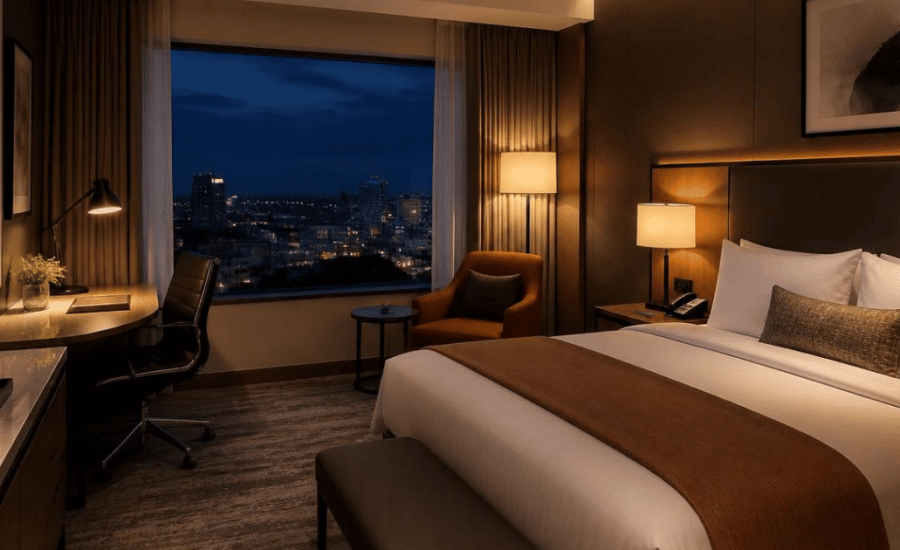
The guest room is where smart lighting makes the most personal impression. A welcome scene can turn on soft, warm light the moment a guest opens the door, so nobody fumbles for a switch with a suitcase in hand. Simple dimming and clearly labeled controls let guests brighten the desk for work or soften the room for a movie. Tunable fixtures can shift toward warmer tones in the evening to create a softer, more relaxed atmosphere before bed.
At night, a single all-off button by the bed saves guests from walking the room to switch off every lamp. Low-level path lighting near the floor can turn on with motion, then fade out once the guest is back in bed. When the room is empty, occupancy-based controls can automatically reduce or shut off lighting, including when a departing guest leaves lights on.
Hallways and Stairwells
Hallways and corridors stay lit around the clock, yet they sit empty for much of the night. Smart corridor lighting can hold a lower level when nobody is around and brighten as soon as a sensor picks up movement. Guests still step into a well-lit hallway, and the property stops paying to light empty corridors at full brightness. Steady, even light also helps hallway security cameras capture clear footage. Stairwells follow the same approach, with egress lighting held to the levels local codes require.
Lobby and Front Desk
The lobby sets the tone for the whole stay. With smart lighting, a lobby can shift through the day on a schedule, using brighter light during the morning checkout rush and warmer, lower light in the evening. Accent lights can highlight the front desk, artwork, or a signature design feature. At the same time, daylight sensors dim fixtures near large windows on sunny afternoons. Because the system handles these changes, the lobby looks right whether the front desk is fully staffed or running lean.
Fitness Center
A hotel gym can sit empty for hours, then fill up early in the morning. Occupancy sensors keep the lights off when no one is working out and bring them to full brightness the moment someone walks in. Bright, cooler light suits cardio and strength training, and some properties offer a dimmer setting for stretching or yoga. Pairing those settings with working TVs and fitness center audio and video makes the space feel cared for.
Meeting Rooms and Event Spaces
Meeting rooms and ballrooms host very different events, sometimes on the same day. Preset scenes let staff switch from bright presentation lighting for a morning conference to a warmer setting for an evening wedding reception with one tap. A presentation scene can dim the front of the room while leaving enough light for note taking. Color-changing fixtures can also add a company’s brand colors for a corporate event or a theme for a celebration.
Restaurant and Bar
Breakfast, lunch, and late-night drinks each call for a different mood. Scheduled scenes can move a hotel restaurant from bright morning light to softer dinner lighting, then to a cozy glow at the bar, without anyone touching a switch.
Exterior and Parking Areas
Exterior lighting shapes a guest’s first impression after dark and their sense of safety on the walk to the car. Smart controls switch entrance, facade, and landscape lighting on at dusk. They can also lower parking lot light levels late at night, then brighten them when sensors detect movement. In addition, good lighting helps parking lot security cameras record usable footage.
What Hotel Owners and General Managers Should Plan Before an Upgrade
A smart lighting upgrade goes most smoothly when a few questions get answered up front.
- Keep Controls Simple – Guests should understand a light switch within seconds. A few clearly labeled buttons by the door, bed, and desk work better than a crowded panel.
- Plan Around Existing Wiring – Older properties can often add wireless controls to existing fixtures, which limits construction in occupied rooms. New builds and major renovations can plan wired systems from the start.
- Connect Lighting to Your Other Systems – Lighting delivers more value when it works with the PMS, door locks, and thermostats as part of a broader hotel property technology plan. One connected system is also easier for staff to learn than several separate apps.
- Check Local Energy Codes – Many commercial energy codes require automatic lighting controls in guest rooms and common areas. Requirements vary by state and code version, so confirm them early in planning.
- Line Up Ongoing Support – Lighting runs every hour of every day. Ask who monitors the system, who answers the phone overnight, and how quickly problems get fixed, since adding another vendor can feed the technology vendor sprawl many hotels already fight.
Frequently Asked Questions About Smart Lighting for Hotels
Yes, many existing hotels can add smart lighting controls without extensive rewiring. Wireless switches, sensors, and fixture control modules can communicate without running new control cabling, allowing properties to upgrade spaces in phases. Some older fixtures or electrical configurations may still require replacement or electrical work, so a site survey should come first.
Most hotel guest rooms use warm white light around 2,700 to 3,000 Kelvin for general and bedside lighting, because that softer tone feels relaxed and residential, while slightly cooler light around 3,500 to 4,000 Kelvin works well at desks and vanities where guests need clearer light for working or getting ready. Tunable white fixtures can cover both ranges from a single light. This gives guests a bright work setting during the day and a warm wind-down setting at night.
Guests rarely struggle with smart lighting when the controls are simple, clearly labeled, and placed where people expect them, such as by the door, bed, and desk, since the automation works quietly in the background and the guest only needs a few obvious buttons to turn lights on, off, up, or down. Research published in Lighting Research and Technology found that participants generally preferred simple, familiar controls that responded quickly and provided clear visual feedback. Participants also favored slide dimmers over preset scenes.
Bringing Smart Lighting to Your Hotel
Smart lighting touches nearly every part of a guest’s stay, from the first walk through the lobby to the last light switched off at night. Smart lighting can make hotel spaces easier for guests to use while helping owners reduce unnecessary energy use and giving staff more control over the property.
The takeaways are straightforward. Start with a clear plan for each space, keep guest controls easy to use, connect lighting to your other systems, and choose a partner who will support the system for the long haul.
At Groove Technology Solutions, we design, install, and support smart lighting as part of a connected hospitality technology plan, right alongside the Wi-Fi, TV, energy management, and security systems many hotels already rely on. Our US-based team provides 24/7 support, and the Groove Guarantee backs every project.
If you are thinking about smart lighting for your hotel, reach out to us. We are happy to talk through your property, answer questions, and help you figure out what makes sense, with no pressure either way.

