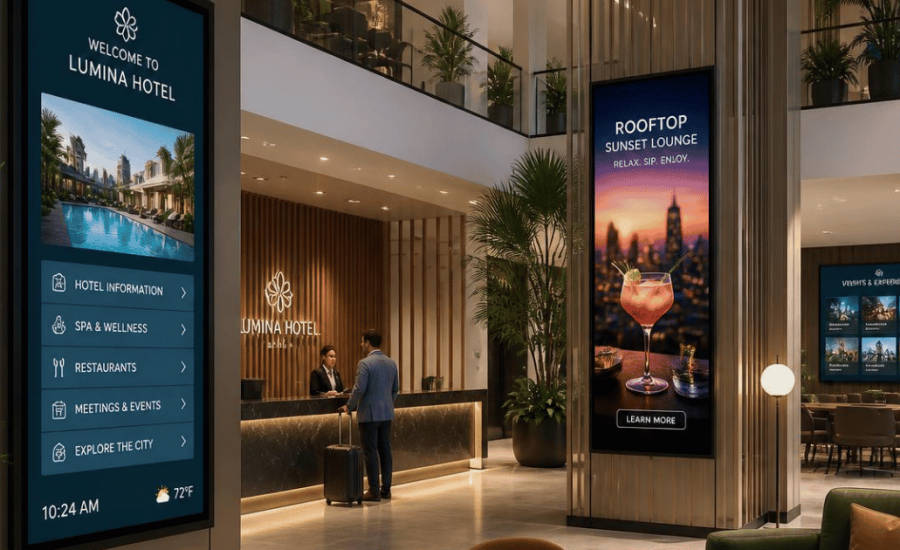
Get Grooven At A Glance
- Hotel digital signage uses networked screens and a shared content management system, so staff can update lobby, event, and restaurant displays from one dashboard instead of reprinting signs.
- Lobbies, elevator landings, event and meeting spaces, and restaurants are the most common spots for hotel digital signage because guests naturally pass through them during a stay.
- The strongest hotel digital signage content mixes practical information, such as event schedules and wayfinding, with promotional messages for dining, spa, or seasonal packages.
- A single hotel digital sign typically runs from a few hundred to a few thousand dollars in hardware, plus a monthly software fee or a one-time license.
- About 64 percent of hoteliers already offer digital signage or plan to add it.
Digital Signage Is Becoming Standard in Hotel Lobbies and Event Spaces
About 64 percent of hoteliers already offer digital signage or plan to add it soon, according to Hotel Tech Report. That shift makes sense once you consider what a printed sign cannot do. A poster board announcing a conference room change stays wrong until someone reprints it, and a laminated menu insert cannot show tonight’s happy hour special. Guests, meanwhile, expect the same real-time information from a lobby sign that they already get from their phones.
It’s no wonder hotels continue to move away from static signage toward networked displays that update instantly and run from one dashboard. But what is the right digital sign setup for your property? This post covers how hospitality digital signage works and the most useful ways to put it to work around a property. It also looks at the content that tends to perform best, where to place screens for the most impact, and what the whole setup typically costs.
How Hospitality Digital Signage Works
Hotel digital signage combines networked display screens with a centralized content management system, so a property can update messages across one screen or an entire portfolio from a single login. Instead of ordering reprints or walking room to room with a stack of paper, staff push new content out in minutes.
Most systems run on the same network already carrying hotel Wi-Fi and entertainment services. That is part of why digital signage fits alongside a property’s broader hospitality technology instead of adding a separate system to manage.
Screens can also be scheduled ahead of time. A lobby display might show a morning welcome message, switch to conference room assignments by mid-morning, and promote the evening happy hour without anyone touching a remote.
Many platforms connect to a property management system too, pulling in check-in counts, event calendars, or room assignments automatically. That cuts down on staff typing the same details in by hand.
We covered the basics of how this technology works more broadly in our post on what digital signage is and how a business benefits from it. The same fundamentals apply once you narrow the focus to a hotel property.
Ways You Can Use Digital Signage at Your Hotel
Once the screens are in place, hotels put digital signage to work in a handful of practical ways.
- Wayfinding to conference rooms, ballrooms, and event spaces during busy days
- Personalized welcome messages for arriving groups or VIP guests
- Real-time updates on weather, flight status, or local traffic
- Promotions for spa treatments, dining specials, or seasonal packages
- Emergency alerts and safety information when it matters most
- Internal updates for staff in back-of-house areas
- Fluid brand elevation and recognition throughout
These same screens can also carry loyalty program reminders or local area recommendations. That ties digital signage into the broader push toward elevating the guest experience with hotel property technology.
While the possibilities for effective digital signage use are endless, it’s important to note that a hotel does not need every use case on day one. Most properties start with a lobby screen or two and add locations as it makes sense.
Best Types of Content for Your Hotel Digital Signage
Hotel digital signage tends to perform best with a mix of the following content types.
- Short event schedules that update automatically as meetings and gatherings change through the day.
- Local recommendations for restaurants, attractions, or transportation that save the front desk repeat questions.
- Menu boards for the restaurant or bar, with pricing that updates without reprinting a single page.
- Brand or property storytelling that reinforces what makes a stay memorable, without needing to spell it out directly.
Motion and video tend to hold a guest’s attention longer than a static image. Mixing in short video loops is worth considering for high-traffic spots such as the lobby or restaurant entrance.
Rotating content on a schedule, rather than leaving the same screen up all day, also keeps a display from fading into the background. Above all, content should be simple enough for a guest to read in the few seconds it takes to walk past.
Where To Place Digital Signage at Your Hotel
The best spots for hotel digital signage are the ones guests already pass through during a stay. Think the lobby near check-in, elevator landings, hallways outside meeting rooms, and the entrance to the restaurant or bar.
Placement matters more than screen count. One well-positioned display outperforms several screens guests rarely walk past.
A lobby screen near the front desk or seating area tends to get the most consistent traffic. That makes it a natural first location for arrival messaging or property-wide announcements.
Elevator landings work well for short-form content guests can absorb during a brief wait. Screens outside meeting rooms help attendees find the right room without asking staff, and restaurant or bar entrances are a natural fit for menu boards and daily specials.
Outdoor or sunlit entrances usually call for a brighter, weather-rated display, while an indoor lobby screen can run on standard hardware. Back-of-house areas benefit from a separate, staff-only screen for shift schedules or internal announcements, kept apart from anything guests see.
What Digital Signage Costs at a Hotel
We have written before about what makes digital signage worth the investment, and cost is usually the first question a Property General Manager asks once the case is made. Pricing depends mostly on how many screens a property installs and whether the hardware needs to handle direct sunlight or weather.
According to Roommaster, a single screen typically runs $688 to $1,320 over three years once hardware and software are added together. A portfolio of five screens runs $6,800 to $11,600 over the same period, and 25 screens land between $39,000 and $58,000.
Software is usually billed one of two ways. Properties pay either a monthly fee of $8 to $20 per screen or a one-time license of $1,000 to $3,000 covering the whole system. Hardware alone can range from a few hundred dollars for a basic indoor screen to several thousand for a large, outdoor-rated display.
Some hotels prefer a managed service that bundles hardware, software, installation, and support into one predictable cost rather than piecing each part together. That is typically how our digital signage solutions are set up.
Hoteliers Also Ask
Hotel digital signage usually runs on the property’s existing internet connection rather than requiring a separate line, since most systems pull content from a cloud-based dashboard. As long as the network reaches the screen’s location, signage can share the same connection already supporting guest Wi-Fi and other hotel technology. A hardwired connection is often preferred in high-traffic areas for a steadier signal, though wireless works fine in most spots.
Installing digital signage in a hotel lobby typically takes anywhere from a few days for a single screen to a few weeks for a property-wide rollout across the lobby, event spaces, and restaurant. The timeline depends mostly on how many screens are involved and whether new cabling or mounting work is needed. Content setup and staff training usually add a bit of time before launch, even after the hardware itself is installed.
Many hotel digital signage platforms can connect to a property management system to pull in details such as room assignments, event schedules, or occupancy counts automatically. That kind of integration cuts down on manual updates, though the level of connection depends on which signage platform and PMS a property uses. It is worth confirming exactly what syncs automatically before assuming a feature works out of the box.
Most hotel lobbies use screens in the 43 to 65 inch range, large enough to read from across the room without overwhelming the space. Event spaces and ballrooms often call for larger displays or several smaller screens near each room entrance, so guests can find the right meeting without walking the length of the hallway.
Bringing Digital Signage Into Your Hotel Lobby and Event Spaces
Digital signage gives hotel lobbies and event spaces a way to keep guests informed without reprinting a sign every time something changes. That holds whether a property starts with one screen at the front desk or rolls out displays across the lobby, elevators, and meeting spaces.
In addition, the technology tends to pay for itself in staff time saved and fewer questions at the front desk.
Groove helps hotels fold digital signage into the same technology plan that already covers Wi-Fi, entertainment, and phone systems. That way it works as one connected system instead of another vendor to manage.
Our thousands of five-star reviews and A+ BBB rating reflect how we approach every project, backed by the Groove Guarantee on every installation we complete.
If you are weighing digital signage for your lobby or event spaces, reach out to us and we can talk through what makes sense for your property.

