Get Grooven At A Glance
- A package locker system stores deliveries in secure compartments and sends each resident a unique code for pickup at any hour.
- Package lockers reduce theft at apartment communities by replacing unattended piles with a logged record from carrier drop-off to resident pickup.
- Lockers ease front desk congestion because carriers deliver straight into the system, so staff no longer sign for, sort, or hand off packages.
- Before choosing a system, owners should weigh daily package volume, available space, resident needs, network readiness, and support after installation.
- Package lockers work best alongside access control and video surveillance, which limit who enters the package area and record every pickup.
Why Multifamily Properties Need a Better Plan for Packages
Package theft has become a shared headache for residents and property teams alike. The U.S. Postal Service Office of Inspector General estimates that at least 58 million packages were stolen across the United States in 2024. A separate Security.org package theft survey found that one in four Americans has had a package stolen at some point.
At multifamily properties, those numbers show up in familiar ways. Boxes stack up in the leasing office, spill across the lobby floor, or sit by a breezeway door where anyone can walk off with them. Meanwhile, staff members spend part of every shift signing for, sorting, and searching for parcels instead of leasing units or helping residents.
Package locker systems give every delivery a secure, self-service home. In this post, we walk through how these systems work, how they reduce theft and front desk congestion, how they compare with other package options, and the questions owners should answer before choosing one.
How a Package Locker System Works
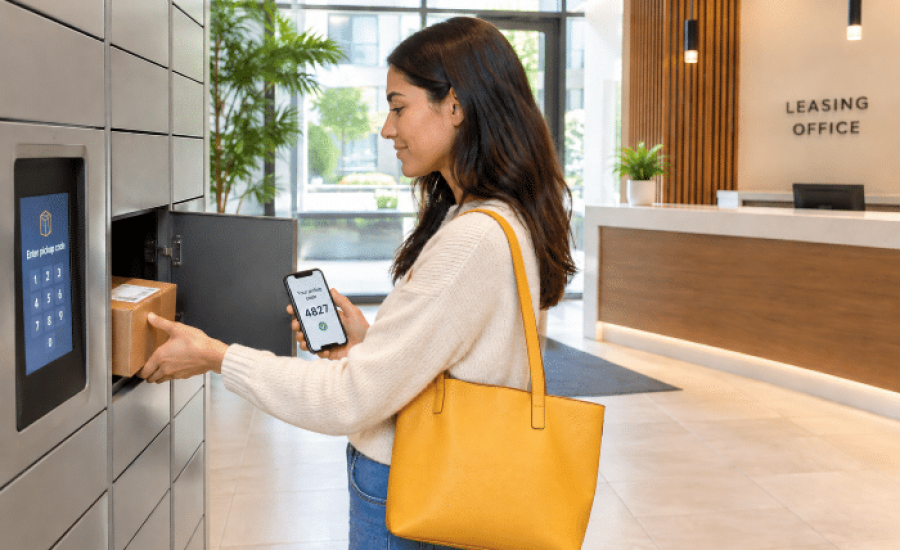
A package locker system is a bank of secure, electronic compartments where carriers drop off deliveries. The carrier scans each package into an open locker, and the system sends the resident a text, email, or app alert with a unique pickup code. The resident then opens that locker any time, day or night.
Many systems maintain digital records, including the drop-off time, the compartment used, and the pickup time. Property teams can see what is waiting, what residents have collected, and which packages have sat for too long. In addition, many parcel locker systems can connect with property management software as well, like Della OS, so resident information stays current as people move in and out.
How Package Lockers Reduce Package Theft in Apartment Communities
Package theft at apartment communities usually comes down to access and visibility. An open mailroom, a propped-open lobby door, or a pile of boxes outside the leasing office gives anyone nearby an easy opportunity. Package lockers help close that gap with access restricted to authorized users through a pickup code, credential, or other authentication method supported by the system.
The digital record helps too. When a resident reports a missing package, staff can check the carrier scan, the drop-off time, and whether anyone opened the locker. That record turns a frustrating guessing game into a quick, factual answer for the resident.
Lockers work even better as part of a layered security plan. Controlled building entry limits the package area to residents, staff, and approved carriers. Cameras placed with the same care used for apartment common area surveillance then record every drop-off and pickup. The Office of Inspector General also points to secure delivery options and better tracking technology as practical ways to cut theft, and lockers bring both to the property.
Easing Front Desk Congestion and Staff Workload
Front desk congestion is the quieter cost of package delivery at MDU properties. Each parcel that passes through the office needs someone to sign for it, log it, store it, notify the resident, and hand it over later. During the holidays or move-in season, that routine can take over the leasing office and crowd out the work that actually fills units.
Package lockers move that workload off the front desk, much like self-guided tours free staff from walking every prospect through a model unit. Carriers can deliver straight into the system, residents get automatic alerts, and pickups happen without a staff member present. As a result, office hours stop being a barrier, so residents who work nights or travel often have the ability to collect deliveries whenever it suits them.
The space benefit is easy to overlook but a valuable one nonetheless. A leasing office cleared of boxes feels more welcoming to prospects on tour while storage closets can go back to their original purpose. Secure, self-service pickup also fits the broader shift in what renters want from smart technology, where convenience and security tend to travel together.
Package Lockers vs Package Rooms vs Front Desk Handling
Owners usually compare three approaches to package management in the multifamily world. Each one fits a different property size, staffing model, and delivery volume.
- Front Desk Handling – Staff accept and store packages in the office. It costs little up front, but it ties up staff time and limits pickup to office hours.
- Package Rooms – A secured room with shelving holds deliveries, and residents enter with a credential. Rooms flex well for odd sizes, while residents search for their own packages and access logs carry more weight.
- Package Lockers – Individual compartments hold each package behind its own door.
Package lockers provide individual compartments and controlled pickup, while secured package rooms offer more flexibility for oversized deliveries. The stronger option depends on the property’s layout, access controls, monitoring, and delivery volume. Many communities combine approaches. For example, a property might pair a locker bank with an overflow shelf inside an access-controlled room for oversized deliveries and holiday peaks.
Questions To Answer Before Choosing a Parcel Locker System
The right package locker system depends on how your property receives deliveries today. Working through these questions first makes vendor conversations faster and helps you avoid an undersized or poorly placed installation.
How Many Packages Arrive Each Day?
Track daily deliveries for a few weeks, including a busy stretch like the holidays or move-in season. That count drives how many compartments you need and in which sizes.
Where Will the Lockers Live?
Lockers need power, a network connection, and a spot that carriers and residents can reach without wandering the building. Indoor lobbies and mailrooms work well, and outdoor-rated units suit garden-style communities without a central lobby.
Who Lives at Your Property?
Student housing, workforce housing, and luxury high-rises all use package lockers a little differently. Think about accessible pickup heights, clear on-screen instructions, and alert options that match how your residents actually communicate.
Will It Connect With Your Other Systems?
Ask whether the locker platform syncs with your property management software and resident app. Fewer separate logins mean less manual data entry when residents move in or out, which matters as you add more smart building technologies over time.
Is Your Network Ready?
Smart lockers may require a reliable internet or local network connection for resident notifications, activity logging, and remote management. Confirm the vendor’s connectivity requirements, backup options, and behavior during an outage before installation. A managed Wi-Fi network or a dedicated wired connection keeps the system dependable during busy delivery windows.
How Will You Pay for It?
Some owners buy locker hardware outright as a capital expense. Others prefer a service model that spreads the cost into predictable operating expenses and bundles ongoing support.
Who Supports It After Installation?
Lockers need occasional attention, from a stuck door to a resident who cannot find a pickup code. Ask who handles service calls, how quickly they respond, and whether resident questions go to the provider or back to your staff.
Package Locker FAQs for Multifamily Owners
No single ratio fits every property, because the right number of package lockers depends on daily delivery volume, unit count, compartment sizes, and how quickly residents pick up, so most providers start with a delivery count over several weeks, including a peak period, and size the system to handle busy days without overflowing.
Package lockers can make sense for smaller apartment properties, especially when the community has limited office hours, a single staff member on site, or recurring package theft, since even a compact locker bank removes the daily sign-and-sort routine, gives residents around-the-clock pickup, and keeps boxes out of hallways and entryways where they invite theft.
Many package locker systems offer compartments in several sizes, and some manufacturers also make refrigerated lockers for groceries and meal kits, while oversized items like furniture boxes or bulk orders usually go to a designated overflow area, such as a secured storage room, so properties should plan for standard, perishable, and oversized deliveries from the start. Asking a provider which compartment sizes and specialty options it supports helps avoid surprises after launch.
When every compartment is full, carriers typically leave remaining packages in a backup location the property designates, such as a locked overflow room or the leasing office, which is why pickup reminders, a reasonable hold period for unclaimed packages, and a system sized for peak season all matter for keeping lockers turning over.
Finding the Right Package Locker System for Your Property
Package lockers solve two everyday problems at once for apartments. They give each delivery a secure, logged home until the resident picks it up, and they take the sign, sort, and search routine off the front desk. The right fit depends on your delivery volume, space, residents, and the systems you already run.
That is everyday work for us at Groove Technology Solutions. We design, install, and support package locker systems for multifamily communities, working with Parcel Pending by Quadient and connecting lockers to the Della OS resident app. Our team also handles the technology across your multifamily property, so your staff has one call to make when something needs attention.
Every project comes backed by the Groove Guarantee, and thousands of five-star reviews from property teams speak for themselves. If package pileups or missing deliveries keep coming up at your property, we would be glad to talk it through. Reach out to us today!

