ERCES & Cell Amplifiers - Schools Universities
Groove keeps K-12 campuses and higher ed buildings fully connected for the students and staff who learn there, and for the first responders who depend on reliable radio coverage when it counts.
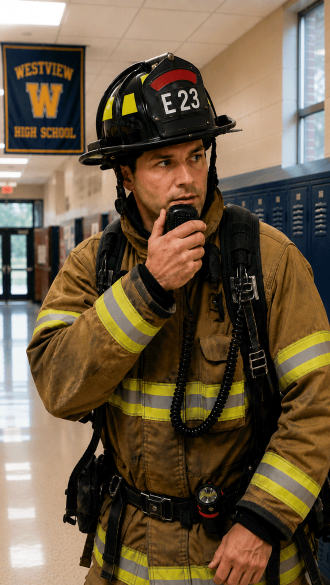

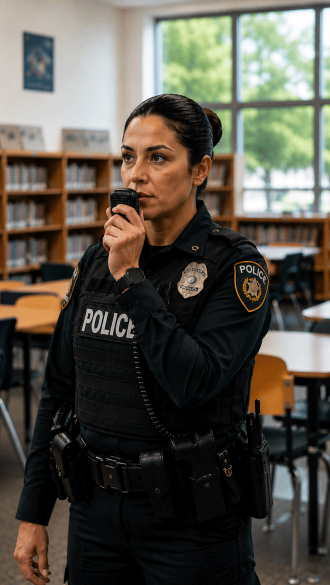

Two Coverage Needs for Your K-12 or Higher Ed Property - One Partner
Schools and universities manage two distinct wireless coverage challenges.
Cellular amplification gives students, faculty, and staff the reliable signal they need to stay connected inside classrooms, residence halls, administrative buildings, and athletic facilities. Dead zones frustrate people and reflect poorly on the property. With a properly designed Distributed Antenna System (DAS), every corner of your campus stays connected regardless of building materials or interference.
Public safety DAS is a different requirement entirely. Local fire codes and ERCES (Emergency Responder Communication Enhancement System) standards require that first responders maintain radio contact throughout your building during an emergency. Without a compliant system, your school or university district may fail inspection. Even more critically, a firefighter or officer could lose communication in a moment that demands it.
Groove handles both cellular amplification and ERCES radio communication. We assess your buildings, design the right system for your footprint, handle installation, and keep everything code-compliant and performing year after year.

First Responder Radio Coverage that Meets Code
Groove’s public safety DAS solutions provide reliable radio frequency coverage across your school property.
Groove Technology Solutions offers end-to-end public safety DAS services for K-12 schools, private schools, and college campuses. We start by assessing your building to identify signal gaps and determine what equipment your structure requires. From there, we handle design, installation, testing, and annual maintenance to ensure your building passes inspection and stays code-compliant year after year.
Our licensed technicians understand the Authority Having Jurisdiction (AHJ) coordination process and manage local ordinance requirements on your behalf. Whether you’re a school district bringing multiple buildings into compliance or a university managing a large multi-building campus, Groove provides the documentation, testing, and service continuity you need.
Prepared for Any Emergency
Specific DAS Design
Engineered to fit your building's unique architecture, materials, and layout
Power Backup
Your ERCES system keeps operating even during a power outage
Code Compliant
AHJ coordination and local ordinance management, handled by Groove
Testing & Maintenance
Yearly testing and maintenance plans keep your system compliant and ready

Cellular Amplification for K-12 & Higher Ed
Providing students, staff, and visitors a powerful cell connection in every classroom, hallway, and common area
Modern schools depend on cellular connectivity. From mobile check-ins and two-way communication between staff to students streaming lectures and faculty accessing cloud-based platforms, reliable cell signal is central to a great education.
Groove Technology Solutions designs and installs carrier-grade cellular amplification systems that extend strong, consistent signal throughout your buildings, through concrete, brick, and metal construction common in K-12 schools and university buildings alike. We start with a full site assessment to identify dead zones and determine optimal DAS placement, then install and test a solution built specifically for your property.
Strong Cell Signal Across Every Building on Campus
Full Building Coverage
Eliminates dead zones throughout classrooms, hallways, offices, and common areas across all major carriers
Reduces Network Strain
Moves cellular traffic off your Wi-Fi and broadband networks
Support for Thousands
Consistent coverage for large student populations and simultaneous connectivity needs
Carrier Grade Approved
Engineered and tested to meet local, state, and federal requirements
Groove's Assessment-First Approach
No two school campuses are the same. A 1970s-era K-12 brick building presents different challenges than a modern glass-and-steel university structure. Groove Technology Solutions takes the guesswork out of the process.
We begin every project with a thorough site walk and signal assessment. Our technicians evaluate your building materials, floor plan, and existing infrastructure to identify exactly where coverage gaps exist and what equipment will fill them. From there, we design and install a system tailored to your property — and we test it thoroughly before we leave.
For school districts managing multiple buildings or universities coordinating across a large campus, Groove serves as your single point of contact for both cellular amplification and public safety DAS. One provider, one accountability chain, one team that knows your property.
CELLULAR AMPLIFICATION FAQS
Frequently Asked Questions About Cellular Amplification
Is a public safety DAS required for K-12 schools and university buildings?
Many K-12 school buildings and university structures do require a public safety distributed antenna system (DAS), though requirements vary by jurisdiction, building size, and occupancy type. Most local fire codes adopt language from the International Fire Code (IFC) or NFPA 72, both of which include provisions for in-building emergency responder radio coverage. A building that fails to meet the applicable threshold — typically defined by square footage, height, or occupancy classification — may not pass inspection. The best way to know whether your building is required to have a system is to schedule a site assessment. Groove walks through your specific building and jurisdiction requirements so you know exactly where you stand before any work begins.
What is ERCES, and does my school district need to comply?
ERCES stands for Emergency Responder Communication Enhancement System. It refers to the in-building infrastructure — antennas, amplifiers, cabling, and related equipment — that ensures first responder radio signals reach every area of a building during an emergency. The standard exists because building materials like concrete, brick, and metal can block or degrade radio frequencies, creating dead zones that prevent firefighters, police officers, and emergency medical personnel from communicating clearly.
Most jurisdictions require ERCES compliance for buildings above a certain size or that fall under specific occupancy codes. For school districts and universities, this often applies to main campus buildings, gymnasiums, auditoriums, and multi-story structures. Groove works with your local Authority Having Jurisdiction (AHJ) to confirm which buildings require compliance and manages the testing, documentation, and inspection process on your behalf.
How does Groove assess whether my building needs a DAS system?
Groove starts every project with a site walk and signal assessment. Our technicians evaluate your building’s construction materials, floor plan, existing infrastructure, and current signal performance to identify where coverage gaps exist. For public safety DAS, we also review your local jurisdiction’s requirements and coordinate with the AHJ to confirm compliance thresholds. For cellular amplification, we test signal strength across your property and map dead zones by carrier.
From there, we design a system tailored to your specific building — not a standard package applied to every property. You receive a clear scope of work before any installation begins.
How long does installation take for a school or university campus?
Timeline depends on building size, construction type, and the scope of the project. A single K-12 school building typically takes a few days to a couple of weeks. A multi-building university campus or a school district project with multiple sites will require a phased schedule developed during the assessment process.
Groove works around your academic calendar whenever possible to minimize disruption to students, staff, and daily operations. We build the project timeline with your facilities team before work begins so there are no surprises.
What codes apply to public safety DAS systems in schools?
Public safety DAS requirements for schools and universities typically draw from one or more of the following:
- International Fire Code (IFC) — Section 510 covers in-building emergency responder communication coverage requirements.
- NFPA 72 — The National Fire Alarm and Signaling Code includes provisions for emergency responder radio coverage systems.
- Local fire codes and ordinances — Many jurisdictions adopt and amend the IFC or NFPA 72 with their own thresholds and testing protocols.
- Authority Having Jurisdiction (AHJ) requirements — The local fire marshal or building department sets enforcement standards and conducts or approves inspections.
Requirements vary by state and municipality, and school buildings may face additional requirements based on occupancy classification or square footage. Groove manages AHJ coordination and local ordinance compliance as part of every public safety DAS installation.
The Right Coverage for Every Corner of Your Campus
Groove proudly provides flexible solutions that fit the size and layout of your property, from a single K-12 school to a multi-building university campus. Connect with us now to get started.