
Inside the Tech Shifts Transforming the Hotel Industry
The hotel industry is entering a period of adjustment. While financial pressures remain, a cautious but growing optimism is emerging. Many owners are taking a more measured approach to upgrades and development, with some choosing to pause or scale back projects until conditions feel more favorable. At the same time, a growing number of operators are beginning to re-engage with investment opportunities, signaling the first signs of renewed momentum. Staffing gaps remain a reality for nearly half of surveyed properties, yet this challenge continues to inspire creative workforce strategies and smarter operational approaches across the sector.
Travel patterns are also shifting. Leisure demand has begun to level off from its post-pandemic peak, and bookings across business, group, and government segments are experiencing modest fluctuations. Still, travelers are on the move, but their expectations and decision-making have changed, creating opportunities for hotels to adapt, differentiate, and stabilize demand.
As the industry looks ahead, it’s clear that resilience remains a defining theme. The trends taking shape in 2025 are laying the foundation for a more connected, intelligent, and guest-centric hospitality landscape by 2026.
AI & Technology: The Next Wave of Hospitality Innovation
As hotels embrace the next wave of innovation, artificial intelligence is becoming an invaluable partner – not to replace personal service, but to make it stronger. The most forward-thinking properties will use AI to remove friction behind the scenes so teams can focus on the kinds of interactions that make a stay memorable.
Operational Efficiency
Mobile-first communication tools, cloud-based platforms, and workflow automation are helping teams work faster and with better visibility across departments. Smart devices and IoT sensors are increasingly used to support predictive maintenance, energy conservation, and equipment monitoring, reducing disruptions before they impact guests.
Contactless options such as mobile check-in and digital keys continue to play an important role, freeing front-desk teams from transactional work so they can offer higher-touch service where it matters most.
Marketing and Guest Engagement
AI-driven marketing tools are enabling hotels to personalize outreach, optimize campaigns, and tailor messaging based on guest behavior and preferences. When integrated with property-level data, these tools allow hotels to communicate more thoughtfully without sacrificing authenticity.
The Shift in Purpose
Across all functions, technology’s role is evolving from novelty to necessity. The hotels that will stand out in 2026 are those that use AI to support – not overshadow – the human elements of hospitality.
Evolving Guest Expectations
Personalization continues to rise as a top expectation among travelers. According to Hotel Management Magazine, 70% of travelers look for experiences that reflect their individual preferences and patterns. This shift requires hotels to quickly recognize whether a guest wants warm, face-to-face engagement or prefers to navigate their stay through mobile tools and self-service options. At the same time, the industry is beginning to acknowledge that delivering this level of customization is nearly impossible when systems operate in isolation. Many properties still rely on a patchwork of disconnected platforms, making it difficult to capture a complete view of the guest.
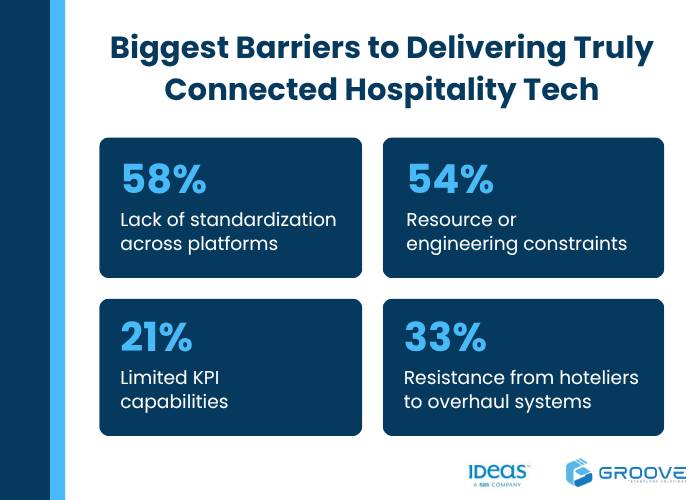
As 2026 approaches, a major priority will be streamlining and integrating these fragmented tech stacks to create unified ecosystems where data flows freely and seamlessly. When systems communicate effectively, teams can respond faster, personalize more meaningfully, and reduce the digital clutter that often complicates both staff workflows and the guest journey. Yet, progress toward this unified future hasn’t been straightforward. A lack of standardization across software providers, limited resources for large-scale infrastructure upgrades, resistance from operators hesitant to disrupt current systems, and underdeveloped KPI frameworks all make consolidation more challenging than it appears on paper.
Still, the industry is moving steadily in this direction, recognizing that the ability to blend convenience, simplicity, and true human connection will define the next era of memorable hospitality experiences.
The Workforce: The Industry’s Greatest Challenge – and Opportunity
Staffing remains one of the most significant obstacles for hoteliers. According to Hotels Magazine, about two-thirds of properties continue to operate without the full teams they need, and turnover persists across departments.
What Today’s Hospitality Employees Prioritize
– Competitive wages and meaningful benefits
– Fast access to earnings, including digital tipping
– Mobile-friendly, user-friendly application processes
– Flexible scheduling
– Skill-building and clear advancement pathways
New Workforce Models
To support operational stability, hotels are increasingly exploring:
– Automation to handle repetitive administrative work
– Cross-training and role mobility
– Upskilling for technology-enabled roles
– Forecasting tools that match staffing levels with real-time business needs
Hotels applying more precise labor forecasting and introducing flexible talent models are reporting reduced burnout, improved retention, and stronger performance overall. Empowered employees remain the cornerstone of resilient operations.
Uncertain Economic Conditions
The current financial climate remains challenging. Rising expenses are outpacing revenue growth, prompting owners to slow down major expenditures and explore creative financing options. Many are choosing to hold onto assets longer, contributing to a noticeable decline in transaction activity.
According to a recent survey of nearly 400 hotel owners and operators by the American Hotel & Lodging Association, rising operational costs and inconsistent demand trends are placing real pressure on profitability and investment decisions.
Operational strategies are shifting as a result. Hotels are moving away from a “fix it when it breaks” mentality and instead adopting more predictive, data-led operational models. They’re also focusing more heavily on system consolidation. In a survey conducted by IDeaS, when asked why they’re integrating technology platforms, 67% of operators cited one core motivation: improved efficiency.
This shift toward smarter operations reflects a broader industry movement: using technology to drive clarity, improve efficiency, and create long-term stability.
Asset Management Transformation
Ownership structures within the hospitality industry continue to evolve. Instead of hotel owners running properties themselves or relying on a single large brand to manage operations, many now hire specialized third-party companies to run the day-to-day hotel business. As this approach expands, the role of asset managers has grown more sophisticated, with a deep emphasis on analytics, performance benchmarking, and informed decision-making.
This combination of expert oversight and competitive pressure among management firms has elevated operational standards across the sector. Owners benefit from specialized expertise, while managers leverage data to guide everything from revenue strategies to guest experience improvements.
Looking Toward 2026: Personalization, Sustainability, and Smarter Operations
As the industry prepares for 2026, several themes are rising to the forefront:
Deeper Personalization
Hotels will use data more intelligently to tailor each aspect of a stay, from communication preferences to amenity recommendations.
Sustainability with a Broader Definition
Environmental practices remain important, but sustainability in 2026 will also mean financial strength, operational flexibility, and a resilient workforce. Guests, investors, and regulators are pushing hotels to think holistically about long-term viability.
Agile Labor Models
Cross-training and dynamic staffing will become essential, allowing employees to move between roles as demand ebbs and flows.
Unified Technology Ecosystems
More properties will consolidate platforms to eliminate data silos, improve forecasting, and enhance decision-making.
Reimagined Spaces
Hotel lobbies will continue transforming into multifunctional environments – part social hub, part workspace, part community venue.
Real-Time Operational Intelligence
AI-powered forecasting and predictive analytics will help teams make better decisions, faster.
Preparing for the Future of Hospitality
The hospitality landscape is evolving quickly, shaped by economic pressures, shifting guest behavior, and rapid technological advancement. Yet the fundamentals remain unchanged: hotels that invest in their people, adopt smart tools, and design operations with flexibility at the core will be the ones that thrive.
Looking toward 2026, the winners will be properties that embrace innovation without losing the personal touch that defines great hospitality. Groove is poised to take hotels into the next year and beyond with expert strategy, innovation, and tailored solutions. Connect with our team today to learn more or for a quote on service.

